
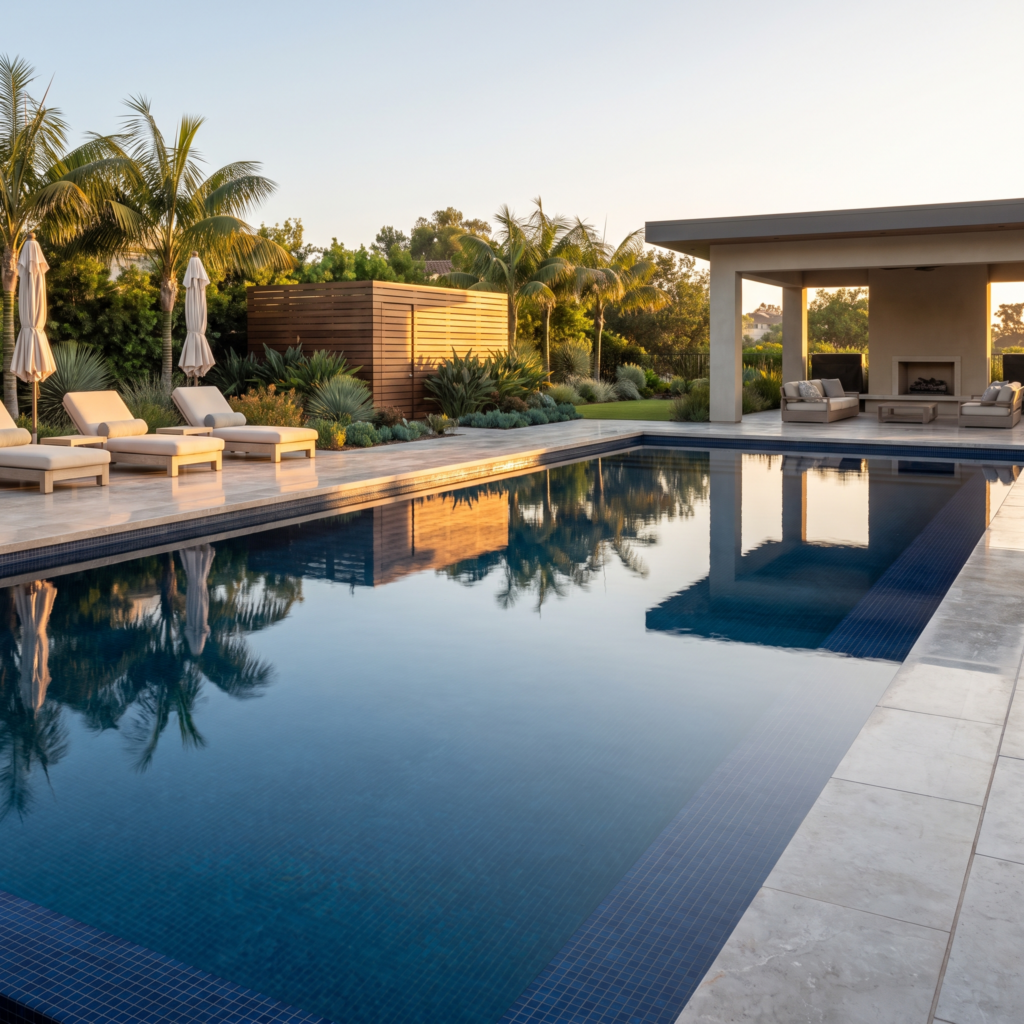
Pool Maintenance in San Diego: What Ownership Actually Involves
Pool Maintenance in San Diego: What Ownership Actually Involves
Most homeowners ask what a pool costs to build. Fewer ask what it costs to live with. That second question deserves a clear answer, because pool maintenance in San Diego is far more predictable than the internet suggests, and because the design decisions made before construction determine most of the workload.
Here is what ownership actually involves, without the scare stories.
The Weekly Rhythm
A well-built pool needs attention on a weekly cadence rather than a daily one. That means testing and balancing water chemistry, brushing the walls and steps, emptying skimmer and pump baskets, and checking that the water level sits where it should.
In practice, most of our clients hire a weekly service and never touch any of it. A professional visit typically runs somewhere in the range of $150 to $300 per month in San Diego depending on the size of the pool and the amount of surrounding planting. Homeowners who prefer to do it themselves generally spend under an hour a week once the routine is familiar.
What Changes With the Seasons
San Diego does not have a real closing season, which removes the largest chore that pool owners elsewhere deal with. However, the year still has a rhythm.
Spring brings pollen and higher debris loads, so filters need more frequent cleaning. Summer means heavier use, faster chemical consumption, and more evaporation. Fall drops leaves, particularly on properties with mature trees. Winter is the quietest stretch, though filter cleaning and chemistry checks continue at a reduced pace.
In addition, equipment benefits from an annual review. Checking seals, salt cell condition, heater performance, and automation settings once a year prevents most of the failures that would otherwise arrive as surprises.
The Real Running Costs
Three items make up nearly all of the operating budget: chemicals, electricity, and heating.
Chemicals are modest, particularly on a salt system. Electricity depends almost entirely on the pump. A variable-speed pump running long hours at low speed uses a fraction of what an older single-speed pump consumes, and the difference on a monthly bill is substantial. Heating is the largest variable by a wide margin, and it depends on the technology chosen and how much of the year you want the water warm. Our comparison of pool heating options in San Diego breaks those numbers down.
Design Choices That Reduce the Work
This is the part worth paying attention to before anything is built, because it is difficult to change afterward.
Circulation and skimmer placement matter most. A pool with properly positioned returns moves debris toward the skimmers rather than into corners, which means less brushing and cleaner water with the same effort. Filtration sized generously runs at lower pressure and needs cleaning less often.
Planting choices around the pool have an outsized effect. Trees that shed constantly, or plants that drop fine material into the water, create year-round work. We select material near the water with that in mind. Finish selection matters too, since some surfaces show mineral deposits and scale far more readily than others.
Automation ties it together. Being able to see and adjust chemistry, temperature, and pump schedules from your phone turns most upkeep decisions into a glance. Our overview of pool automation covers what is worth including.
Where Maintenance Problems Usually Come From
When a pool becomes a burden, the cause is rarely the pool itself. It is almost always one of three things.
Undersized equipment is the first. Specifying a pump or filter to hit a budget number creates a system that works harder for worse results. Poor drainage is the second, because water and soil moving toward the pool bring debris and staining with them. Skipping small repairs is the third. A seal or a salt cell replaced on time is a routine expense, while the same part ignored for a year becomes a much larger one.
What to Expect in the First Year
New plaster and pebble finishes go through a curing period, so the first month involves closer attention to chemistry and brushing than the years that follow. We walk every client through that window and set the automation up before handoff.
After that, the pool settles into a routine that most owners barely think about. As a result, the honest summary is this: a properly designed pool in this climate is a low-friction thing to own, and the effort it takes was largely decided during design.
If you are planning a pool and want the upkeep considered from the start rather than inherited, we are glad to walk your property with you. You can reach us at everlastingpoolsandlandscape.com or (858) 250-3233.
Follow our work in Google Search.