
How We Protect Your Home and Landscape During Construction
How We Protect Your Home and Landscape During Construction
One of the most common questions we hear before a project begins has nothing to do with design. Homeowners want to know what happens to the rest of their property while we work. It is a fair question. Backyard construction in San Diego means heavy equipment, excavation, and material deliveries moving through a home you live in every day.
Protection is not something we improvise on site. It is planned before the first machine arrives. Here is how we approach it.
We Plan Access Before We Plan Anything Else
Access determines nearly everything about how a site is protected. Therefore we walk the route before the schedule is set, from the street to the work area, and note every surface the equipment will cross.
Driveways get plywood or track mats where machines turn. Sidewalks and pavers are covered rather than driven on bare. When access runs through a side yard, we measure clearances carefully so nothing scrapes stucco or fencing. On tight lots we sometimes bring in smaller equipment or use a conveyor rather than force a machine through a narrow gate.
In some cases the best answer is craning material over the house. It costs more, yet it keeps a finished front yard untouched.
Existing Landscape Gets Protected, Not Replaced
Mature trees and established planting are among the most valuable things on a property. They cannot be bought back. As a result we identify what stays on day one and mark it clearly.
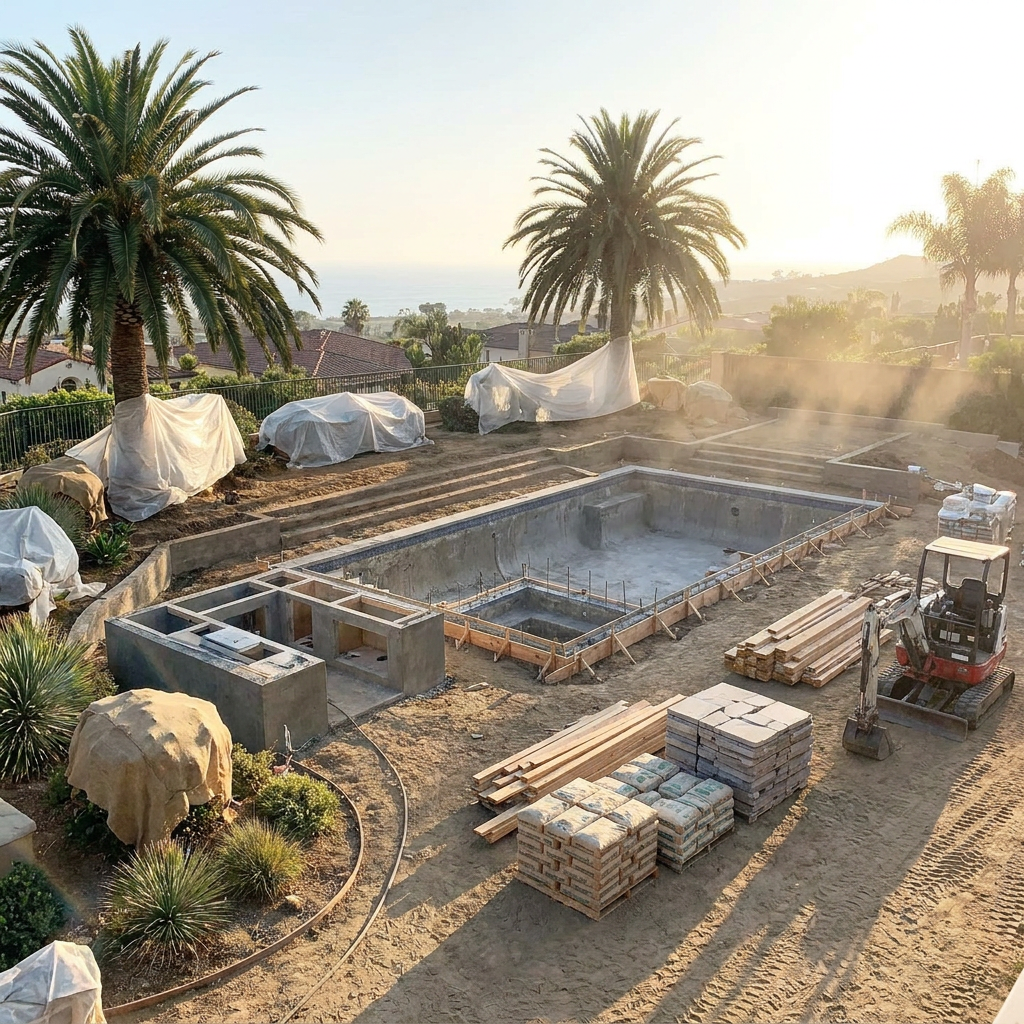
Trees that remain get trunk wrapping and fenced root zones so equipment cannot compact the soil around them. Irrigation lines are located and mapped before excavation. Plants worth saving but sitting in the work area are dug, potted, held, and replanted when the hardscape is finished.
Lawn areas that stay in place get covered. Turf recovers from shade far better than it recovers from repeated equipment traffic.
Dust and Debris Stay Contained
Excavation and saw cutting generate dust. Left unmanaged, it travels indoors and settles on everything. Consequently containment is part of the daily routine rather than a reaction to complaints.
We use wet cutting where possible, which cuts airborne dust dramatically. Doors and windows facing the work area get sealed when heavy demolition is scheduled. Screening on temporary fencing keeps debris inside the site. In addition, exterior surfaces such as glass and window frames get cleaned as work progresses instead of only at the end.
Material staging matters too. Sand, gravel, and stone sit on protective ground cover so nothing stains a driveway or migrates into planting beds.
The Site Gets Cleaned Every Day
A tidy site is the clearest signal of how a company works. It also prevents most of the damage that happens on jobs.
Our crews clean at the end of every day. Tools are put away, debris goes into the bin, and pathways stay clear. Nails and fasteners get swept and magnet rolled, especially near areas where children or pets will be. Equipment parks in the same designated spot each evening rather than wherever it stopped.
Beyond safety, daily cleanup means you are never living beside a mess for weeks at a time. That changes how the whole project feels.
Utilities, Drainage, and the House Itself
Before excavation we locate utilities, including the lines that never appear on a plan. Older San Diego properties often hold surprises such as abandoned pipe, unmarked electrical runs, and previous irrigation systems.
Drainage gets attention early because open excavation changes how water moves. We keep temporary drainage in place through the wet portions of a build so runoff never heads toward the foundation. Exterior walls near the work area get protection when equipment operates close by, and existing stucco or siding is documented with photos before we start.
That documentation protects everyone. If something needs repair, there is no debate about condition.
You Always Know What Is Happening Next
Protection is partly physical and partly informational. Knowing that a concrete truck arrives Tuesday morning lets you move your cars and plan your day.
For that reason we tell you what is coming before it arrives, including deliveries, loud phases, and any day water or power needs to be off briefly. Our approach to clear communication during a build covers this in more detail, and our overview of what to expect during construction lays out the phases in order.
A backyard project should improve your property without costing you the parts of it you already love. If you are planning a build and want to understand how we work day to day, we are glad to walk you through it at everlastingpoolsandlandscape.com or by phone at (858) 250-3233.
Follow our work in Google Search.