
Pool Heating in San Diego: Solar, Gas, and Heat Pumps Compared
Pool Heating in San Diego: Solar, Gas, and Heat Pumps Compared
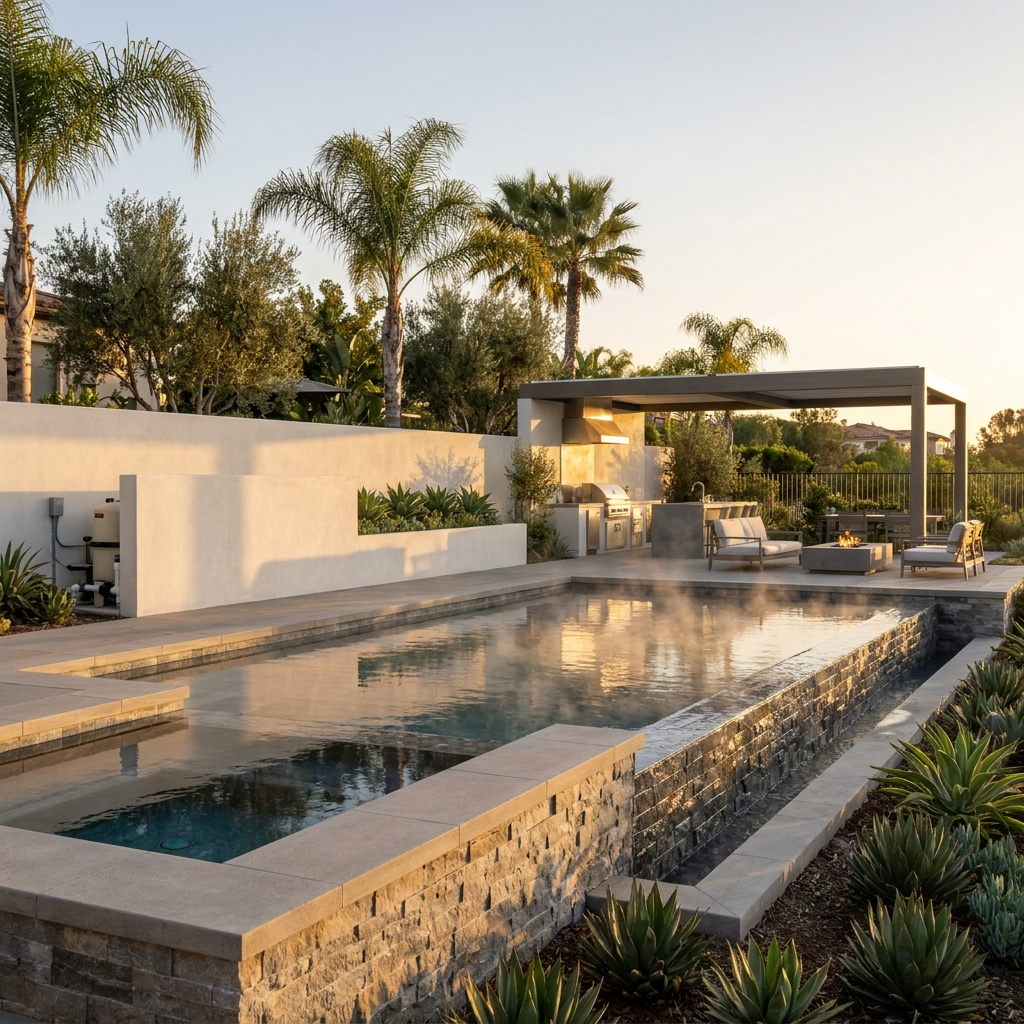
San Diego gives us one of the best swimming climates in the country. Still, water temperature is what actually decides whether a pool gets used in February. Most homeowners assume our weather makes heating optional. In practice, the coastal marine layer and cool evenings keep unheated pools in the mid sixties for much of the year. As a result, pool heating in San Diego is less about surviving winter and more about extending the season from three months to nine or more.
Three systems are worth considering: solar, gas, and heat pumps. Below is how we think about each one when designing a pool that will actually be swum in.
Why Water Temperature Decides How Often You Swim
Comfortable swimming starts around 82 to 86 degrees for most people. Unheated San Diego pools rarely reach that range outside of July and August. Coastal properties run cooler than inland ones because of steady ocean breeze and evening fog. Inland areas such as Poway and Rancho Santa Fe hold heat longer during the day, yet they also drop further overnight.
Therefore the real question is not whether to heat. It is which system matches how you plan to use the space. A family that swims every weekend has different needs than a couple who wants a warm plunge on a January evening.
Solar Pool Heating: Quiet, Efficient, Weather Dependent
Solar collectors sit on the roof and use pool water itself as the heat transfer fluid. Water circulates through the panels, warms in the sun, and returns to the pool. Operating cost is close to zero beyond the pump energy you already use.
Solar works beautifully in San Diego for one reason: we have sun. In addition, panel arrays last a long time with very little maintenance. The tradeoff is control. Solar gains roughly 5 to 15 degrees over ambient, and it cannot deliver heat on a gray morning or after sunset. It also needs unshaded south or west facing roof area, which not every home has.
Solar is the right choice for homeowners who swim during daylight hours and want the lowest possible monthly cost.
Gas Heaters: Fast Warmth On Demand
A natural gas heater is the fastest way to raise water temperature. It can bring a spa to 102 degrees in twenty minutes and lift a full pool several degrees in a few hours. Weather does not matter. Time of day does not matter.
However, speed comes at a cost. Gas is the most expensive option to run, especially on a large body of water. For that reason we rarely recommend gas as the primary heater for an entire pool. Instead, it earns its place on the spa, where fast response is the whole point.
Many of our projects pair a gas heater on the spa with a second system for the pool. That gives you instant hot water without heating thousands of gallons at gas prices.
Heat Pumps: The Efficient Middle Ground
A heat pump pulls warmth from the surrounding air and transfers it into the water. It does not create heat, so it uses far less energy than a gas unit. Heat pumps typically deliver three to five times more heat per unit of energy than gas.
The tradeoff is pace. A heat pump warms water gradually over hours rather than minutes. It also performs best when air temperature stays above roughly 50 degrees, which describes most San Diego days. For example, a heat pump paired with a good cover can hold a pool at 85 degrees through most of the year at a reasonable monthly cost.
For homeowners who want a consistently warm pool without a large utility bill, this is usually the answer. Pairing it with pool automation makes it even better, because you can pre warm the water from your phone before you leave the office.
How the Systems Compare Side by Side
Solar has the lowest operating cost and the least control. Gas has the highest operating cost and the most control. Heat pumps sit between the two, with strong efficiency and moderate response time.
Upfront investment follows a similar pattern. Gas heaters cost the least to install, heat pumps cost more, and solar arrays fall in between. Lifespan matters too. Solar panels and heat pumps generally outlast gas heaters.
One accessory changes the math for every system: a cover. Evaporation is the largest source of heat loss in any pool. A cover can cut heating cost meaningfully, regardless of which unit you choose.
Design and Placement Still Matter
Equipment has to live somewhere. Heat pumps need airflow and produce a low hum, so placement away from bedrooms and dining areas is worth planning early. Gas heaters need clearances and venting, and solar needs roof access.
We handle this during design rather than after construction begins. Equipment gets screened behind architectural walls or integrated into the landscape so it stays out of sight and out of earshot. If you are still shaping the overall plan, our guide to choosing between a spa, swim spa, and plunge pool is a useful companion piece.
If you are planning a pool and want to understand how heating fits your design, your climate, and the way you actually live outdoors, we are glad to talk it through. You can reach our team at everlastingpoolsandlandscape.com or call (858) 250-3233.
Follow our work in Google Search.