
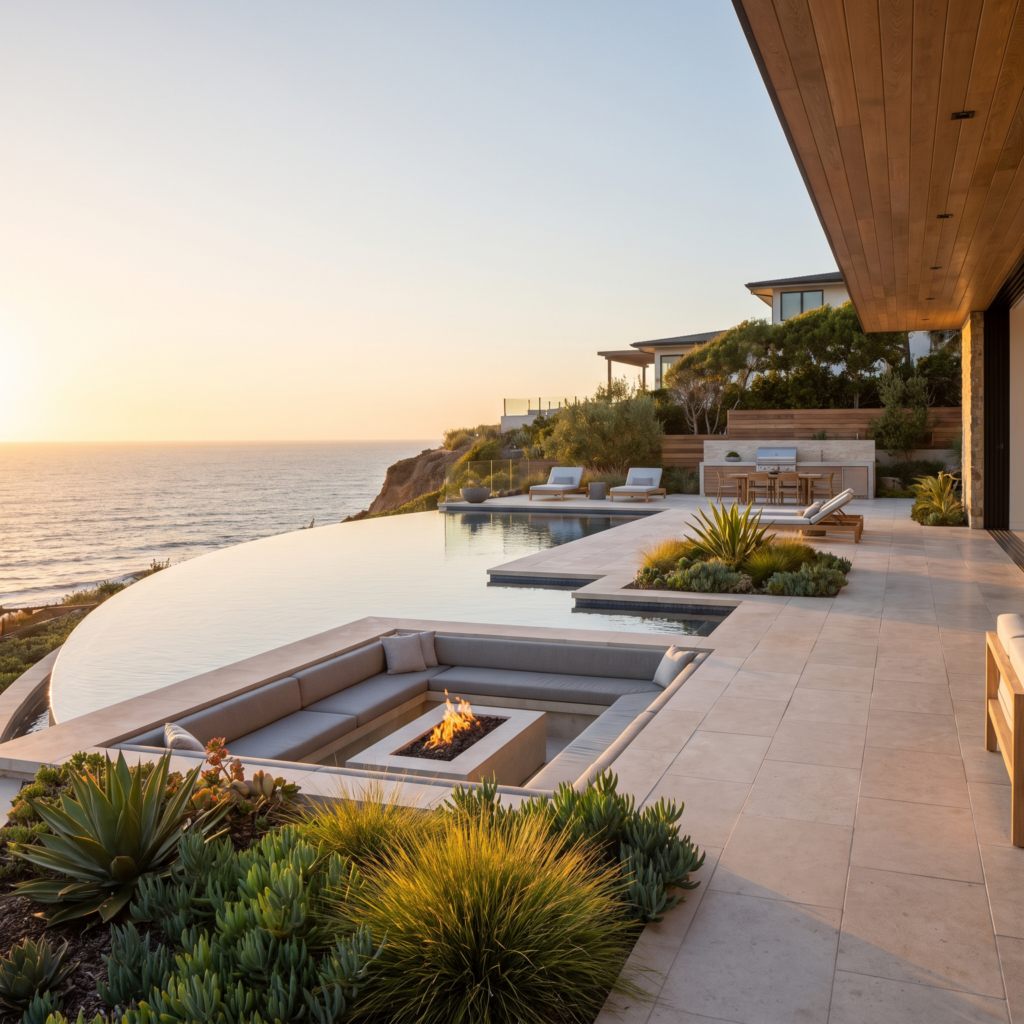
Luxury Outdoor Living on a Coastal vs. Inland San Diego Property
Luxury Outdoor Living on a Coastal vs. Inland San Diego Property
One County, Two Very Different Climates
San Diego is often described as a single climate, but anyone who has driven from Del Mar to Poway on a July afternoon knows better. The coastal strip stays soft and gray through much of the morning, then settles into a mild seventy degrees. Fifteen miles inland, the same afternoon can reach ninety five. That difference is not a small detail. It quietly shapes every decision in a luxury backyard, from where the seating goes to which stone will still look beautiful in ten years.
Homeowners often arrive with a folder of saved images. Almost all of those images were taken somewhere with a very specific climate. Part of good design work is translating the feeling in those photos into something that performs on the actual property. For example, a shaded lounge that feels perfect in Rancho Santa Fe may feel cold and unused in Encinitas, where the marine layer already does the shading for you.
How the Coast Shapes a Backyard
Coastal properties live with salt, wind, and moisture. Salt air travels farther than most people expect and it works slowly on metal, on unsealed stone, and on anything with an inexpensive finish. As a result, coastal design leans on materials that age gracefully rather than materials that simply look good on day one. Powder coated aluminum, marine grade stainless, natural stone with a proper sealant, and porcelain pavers all earn their place here.
Wind is the second consideration. An open coastal yard can be beautiful at noon and unusable at four in the afternoon. The answer is rarely a tall wall. Instead, the design uses layered screening: a low seat wall, a run of dense planting, a pergola with a solid section on the windward side. Each element takes a little energy out of the breeze so the seating area stays comfortable through sunset.
Coastal light also rewards restraint. Views tend to be the most valuable feature on the property, so the architecture stays low and quiet. Infinity edges, flush decking, and glass or cable railing keep the sightline open. Our La Jolla guide to coastal outdoor living covers this approach in more detail.
How Inland Heat Changes the Plan
Inland properties come with a different set of gifts and a different set of problems. The gift is warmth. Pools get used far more often and for a longer season. Evenings stay comfortable well past dinner. The problem is midday. Between eleven and four, an unshaded patio in Poway or Escondido is simply not a place anyone wants to sit.
Because of that, shade becomes structural rather than decorative. Covered patios, deep overhangs, solid pergolas, and mature shade trees do the heavy lifting. Surface temperature matters just as much. Light colored decking, cool touch pavers, and generous planting margins around seating keep the space walkable in bare feet.
Water also behaves differently inland. Evaporation runs higher, so pool sizing, fill lines, and cover choices deserve more attention. In addition, inland lots are frequently larger and more sloped, which opens the door to terracing, elevation changes, and separate zones that would crowd a smaller coastal lot.
Materials Behave Differently in Each Zone
The same paver can be an excellent choice in one zone and a maintenance burden in the other. Dark natural stone reads beautifully near the water, where it stays cool, but it can become uncomfortably hot on an inland deck. Untreated steel develops character inland and corrosion at the coast. Even wood species perform differently depending on how much moisture sits in the air overnight.
This is why material selection happens after the site walk, never before. We look at orientation, prevailing wind, existing shade, and how the family actually intends to use the space. If you want a deeper look at that process, our guide on choosing the right materials for a San Diego backyard walks through the tradeoffs.
Planting, Water, and the Long View
Coastal planting palettes favor salt tolerance and wind tolerance. Agave, rosemary, westringia, and ornamental grasses hold their form in conditions that would shred a softer plant. Inland palettes can be broader and more layered, with olive, citrus, and larger canopy trees that provide both shade and structure.
Irrigation strategy follows the same logic. Inland gardens ask for more water in summer and benefit from deeper, less frequent cycles. Coastal gardens often need less than owners expect, and overwatering is a common cause of decline. Designing for the correct zone means the landscape looks intentional in year five, not just in the first season after install.
Design for the Property You Actually Own
The most beautiful backyards in San Diego are not copies of each other. They are honest responses to a specific site. A coastal property earns its luxury through restraint, sightlines, and materials that survive the salt. An inland property earns it through shade, elevation, and a plan that makes the hottest hours comfortable.
Both can feel like a private resort. They simply get there by different routes. If you are early in the process and want to understand what your particular lot can support, we are happy to walk it with you and show you the design before anything is committed. Visit everlastingpl.com or call (858) 250-3233 when you are ready to start the conversation.
Follow our work in Google Search.